IGIgor Galićpersonal presentationSR ↗Contact ↗

SOFTWARE · SYSTEMS · PEOPLE

I build software
that lasts.

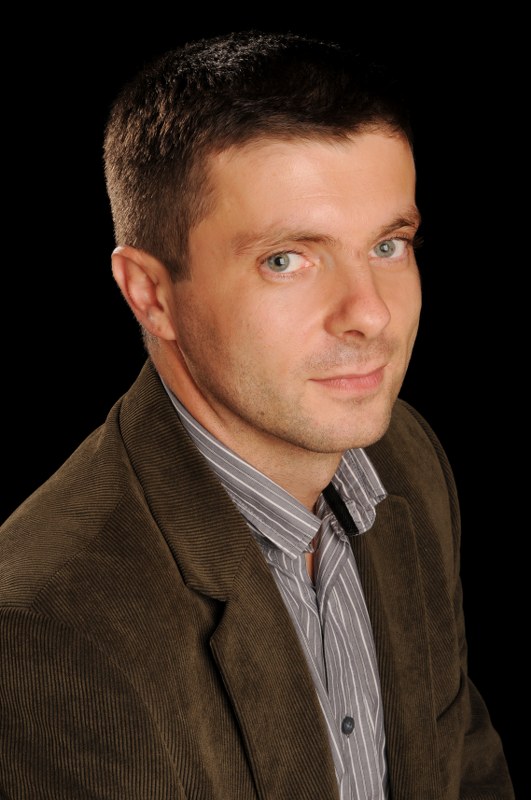
I’m Igor Galic, a software engineer and systems architect. My work brings together telecommunications, application development, data, and a long-term commitment to products people use every day.

2003–14period documented in the original biography
4ways to deliver one system
2003start of my professional journey

* The original presentation documents my professional journey through 2014.

Igor GalićNOVI SAD, SERBIA
EXPERIENCE THAT BUILDS 01 — 06 ↓
01 / PERSONAL STORY

FROM SIGNALS TO SYSTEMS

Curiosity about how things work became a life’s work.

I was born in Sombor and shaped professionally in Novi Sad. I graduated in electrical engineering, specializing in electronics and telecommunications. Even as a student, I was drawn to the intersection of mathematics, signals, and software.

My first projects were research-focused: digital image and signal processing, fuzzy logic, and shape recognition. Then came mobile devices, communication protocols, client-server applications, and large business systems. Each step brought new responsibility—from implementing a component to shaping architecture, leading a team, and delivering a product.

“The most interesting systems don’t come from one big idea, but from many carefully connected decisions.”
02 / SELECTED PROJECTS

FROM RESEARCH TO PRODUCTS

Different scales of problems.
The same engineering approach.

The original site gave each project its own story. This version preserves the context, my contribution, and the technical decisions that shaped it.

mBid24 mobilna aplikacija02 / 06
JUN — NOV 2005. MOBILE INTERNET

mBid24

An eBay client for mobile phones

A client-server service that brought eBay listings to mobile devices. The J2ME client was designed to run across Nokia, Sony Ericsson, Motorola, and Siemens phones; the server used Java SE, Servlets, JSP, and JSTL.

I led the server-side work: designing and implementing registration and account management, an administrative CMS, a SOAP-like interface for the phone, and a proxy that handled cryptography, HTTPS connections, and GPRS traffic optimization.

Push-to-talk system03 / 06
APR — NOV 2004. EMBEDDED · TELECOM

PoC Client 1.0

Push-to-talk over a cellular network

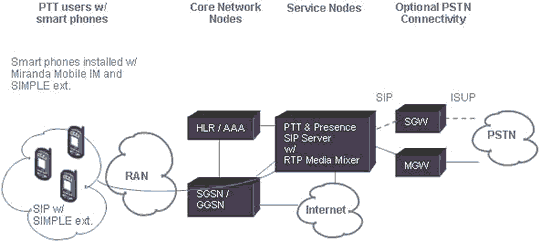
The client combined SIP, HTTP, and RTP channels for call control, presence, contacts, chat, and instant messaging. It was developed in portable embedded C++, following IETF, 3GPP, OMA, and Siemens specifications.

I was responsible for the HTTP, RTP, and RTCP components, including the HTTP/1.1 subsystem, authentication, and RTP stream handling with reduced memory copying.

IMSSIPHTTPPRESENCE · CHAT · MESSAGING
SEP 2003 — MAR 2004. IMS

IMS Client 2.0

A communication client for UMTS

As part of an innovation team at the Faculty of Technical Sciences, I worked on the HTTP subsystem for an IP Multimedia Subsystem client. It combined SIP and HTTP for presence, contacts, chat, and instant messaging.

I led the design and implementation of HTTP/1.1 based on RFC 2616 and RFC 2617. I also contributed to SIP, HTTP, and XML parser/encoder design, from grammar through embedded C++ implementation and testing.

Shape recognition05 / 06
JAN 2003 — MAR 2004. RESEARCH

Shape Recognition — ASM

Active Shape Model for robotic vision

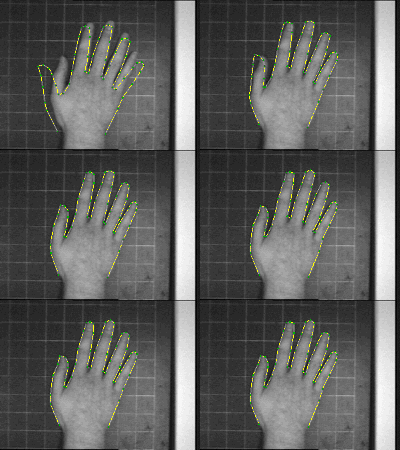
This postgraduate research project explored whether Active Shape Models could serve as a fast filter for recognizing shapes in images and support real-time processing. I compared existing filters, examined the algorithm’s potential, and designed and implemented a solution.

Digital signal processing06 / 06
FEB — MAR 2003. DIGITAL SIGNAL

Multirate DSP

Sampling-rate conversion and filter design

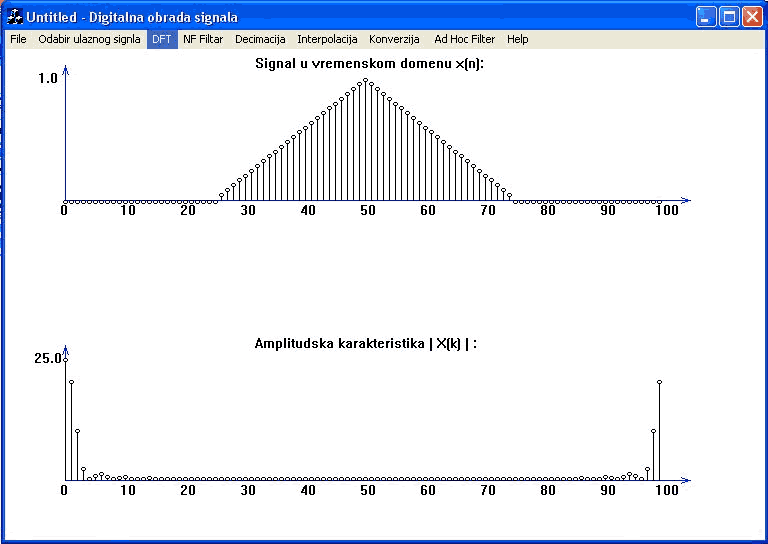
This C++ application, built with MFC, comprised configurable modules for integer-factor downsampling and upsampling, rational-factor conversion, and Ad Hoc filter design. It showed hardware implementations and time- and frequency-domain responses; filters could be shaped by placing zeros and poles on the z-plane.

F

GRADUATION THESIS · MARCH — SEPTEMBER 2002.

FIRE fuzzy filter for image processing

This research compared conventional noise-removal and edge-detection filters with the fuzzy-logic FIRE filter. I implemented and tested the filter in MATLAB, added a genetic algorithm to generate its fuzzy rule base, and explored fuzzy edge detection on noisy images.

MATLAB
FUZZY LOGIC
GENETIC ALGORITHM

* The original site lists “June 2008 — present”; its detailed professional timeline runs through 2014.

03 / PROFESSIONAL JOURNEY

GROWING RESPONSIBILITY, REAL DELIVERIES

From protocols
to a product line.

The original presentation records my career through 2014. The details below preserve that record and make its historical context clear.

Sales engineer · technical support

Customer support for Siemens Simatic and Logo PLCs, as well as low-voltage equipment—my first professional encounter with systems that control physical processes.

INDUSTRY

Faculty of Technical Sciences · UMTS / IMS

Member of the innovation team. Designed and implemented HTTP for an IMS client in embedded C++. Then worked on the PoC project, leading implementation of the RTP and RTCP protocols.

TELECOM

Military service · return to study and development

After nine months of military service, I returned to the faculty and continued working with Zesium Mobile on mBid24, taking the lead on the server application.

MOBILE SOFTWARE

JBlend / BenQ Diamond

Ported the Java VM to an Infineon platform. As test manager, I led Smoke and TCK testing, tested and reimplemented Low Level Graphics (JSR 118 MIDP), and debugged on target devices.

EMBEDDED

FMED · framework for mobile and embedded devices

Contributed to the architecture and design of a layer connecting protocol-based applications, and worked on the Symbian port. The first phase was completed, with development continuing on the protocol layer.

ARCHITECTURE

ParagrafLex · architecture and project leadership

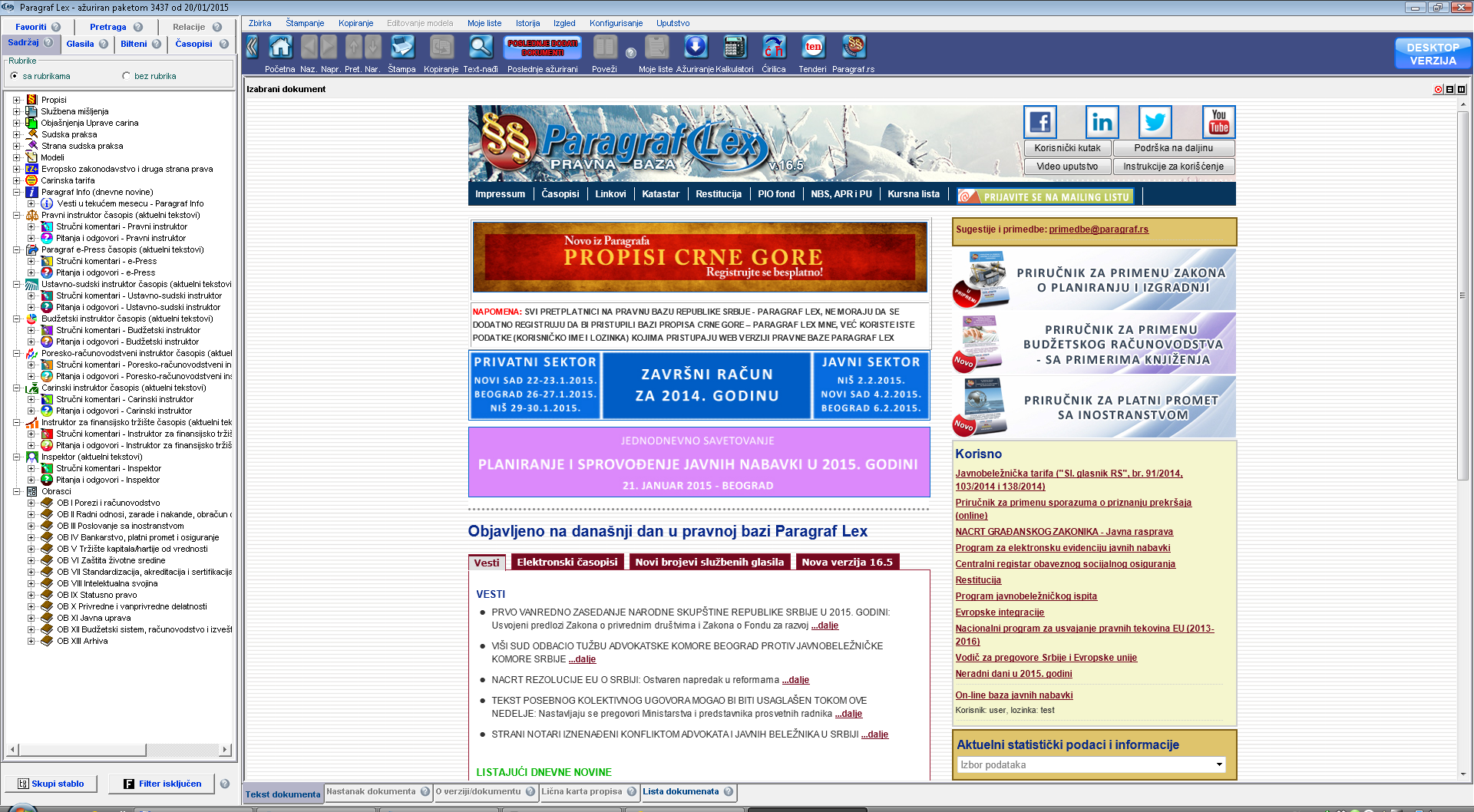
Project manager and software architect for a suite of eight applications. A team of 6–8 engineers delivered the project in 17 months. It launched commercially in December 2008.

LEADERSHIP

Lexus Agency · product development and growth

I started a software development agency and later led employees and three partner development agencies. The original site lists Paragraf Lex and EIntelligence among its main clients. The work covered planning, architecture, delivery coordination, desktop, web, and mobile systems, and support for a large installed base.

How the system evolved, year by year +
20095 releases

The first commercial year after launch. Five ParagrafLex releases and five editor releases. The original record notes more than 10,000 customers and 600 LAN servers.

Desktop · Single · Correcture · Dispatcher · Classic · Editor
201039 releases / applications

Team of 3 full-time and 3 part-time engineers. Five system releases, start of the web legal database and Single USB project.

Web database · Single USB · 2 milestone builds · 5 desktop releases
201137 releases / applications

First commercial web database release, launch of ParagrafORG, and continued system development. The USB edition was discontinued due to low sales.

ParagrafORG 0.1–2.0 · Web 14.3 · Desktop 14.0–14.3
201253 releases / applications

The web demo was completed and integrated into ParagrafLex. Development continued on ParagrafORG and the legal database.

ParagrafORG 2.1–2.8 · Web 14.5 · Desktop 14.4–14.5
201359 releases / applications

Launched a lawyer planner. Developed the Android legal database, web demo, payment system, and ParagrafLex. Team of 3 engineers.

Android 1.1–1.2.2 · Lawyer planner 0.1–0.2 · ParagrafORG 2.9–3.0
201433 releases / applications

Team of 6 full-time engineers. Customized and integrated the Montenegro edition of ParagrafLex; worked on Project X and a mobile client. The lawyer planner was put on hold.

Serbia and Montenegro · desktop and web 16.5 · Android 2–4 · ParagrafORG 3.0–3.1.1

Release counts and version numbers are taken from the original site and reflect its historical record.

FOUNDER
8applications in the first ParagrafLex system
6–8members on the 2007–08 project team
10k+customers recorded in 2009
600+LAN servers recorded in 2009
04 / EXPERTISE & TOOLS

A broad background, grouped by problem area

From hardware and signals
to business logic.

This list reflects the technologies on the original site. Many describe historical experience, not necessarily my day-to-day tools today.

01

Software development

Java ME, SE i EE · C/C++ · Assembler · PHP · JavaScript · HTML · PL/SQL · XML · MATLAB

↗
02

Architecture and the Java ecosystem

Spring · EJB · Hibernate · JSF · JSP / JSTL · Swing / AWT · JavaFX · Lucene

↗
03

Databases and data

MySQL · PostgreSQL · HSQLDB

↗
04

Operating systems and servers

Linux · Windows · Android · Symbian · APOXI

↗
05

Telecommunications

HTTP · SIP · RTP / RTCP · UMTS · IMS · PoC · mobilne mreže

↗
06

Research and signal processing

Fuzzy logic · genetic algorithms · DSP · image processing · robotic vision

↗
07

Tools and delivery

Eclipse · JDeveloper · IntelliJ IDEA · NetBeans · CVS · Bugzilla · Redmine

↗
08

Interests

Software architecture · LAN · internet · telephony · control networks

↗
∞

EDUCATION

Faculty of Technical Sciences, University of Novi Sad

Electrical engineering · electronics and telecommunications · graduation thesis: FIRE fuzzy filters for digital image processing. After graduating, I pursued postgraduate studies and worked as a research assistant at the faculty.

SOMBOR → NOVI SAD
05 / LOOKING AHEAD

SAME PRINCIPLES. NEW TOOLS.

AI is changing how we work.
Engineering still takes judgment.

My experience took shape as mobile apps, the internet, and distributed systems were expanding. Today, AI opens a new chapter in that same story: how do we turn a new capability into a reliable part of a real product?

01

AI is a system capability

A model alone is not a product. You need quality data, a clear use case, integration into real workflows, and an understandable result.

02

Reliability is designed

As with protocols and business applications, we have to plan for errors, limits, security, privacy, monitoring, and recovery.

03

People remain accountable

AI can speed up research, development, and information processing. Judging whether a result is accurate and useful still depends on expertise and context.

This is my current professional perspective on AI—a continuation of my experience with systems and products, not a claim about a project absent from the original site.

06 / LET’S TALK

OPEN TO INTERESTING CHALLENGES

Every interesting collaboration starts with a good question.

If you’re interested in software architecture, long-term product development, telecommunications, or applying new technologies, get in touch.

igi.cyber@gmail.com ↗NOVI SAD, SERBIA